Industrial Blade
Manufacturers
Manufacturers

- All
- Product Name
- Product Keyword
- Product Model
- Product Summary
- Product Description
- Multi Field Search
English
Views: 0 Author: Site Editor Publish Time: 2026-01-02 Origin: Site


In industrial processing, efficiency isn’t just about the horsepower of your motor or the size of your hopper. It often comes down to the smallest, sharpest component in the machine: the shredder blade. Whether you are running a municipal waste facility, a plastic recycling plant, or an automotive demolition yard, the blade is the primary contact point that determines throughput, energy consumption, and output quality.
Choosing the wrong blade can lead to frequent jams, inconsistent particle sizes, and skyrocketing maintenance costs. Conversely, the right blade configuration can increase operational uptime and significantly extend the lifespan of your machinery. However, navigating the market of tool steels, geometric profiles, and shaft configurations can be complex.
This guide breaks down the essential categories of industrial shredder blades, the materials they process best, and the logic you should apply when selecting replacements or custom solutions for your facility.
Before analyzing specific steel types or shapes, it is vital to understand the mechanical action of shredding. Unlike a kitchen knife that relies solely on sharpness, industrial blades utilize a combination of shearing, tearing, and fracturing forces.
Industrial shredder blades are considered system-critical components rather than simple consumables. While they do wear out, their design dictates the entire mechanical advantage of the shredder. They function differently depending on the desired outcome:
Shredding: Reduces volume effectively but often produces irregular shapes.
Granulating: Uses high speeds to create uniform, small particles (often for plastic reuse).
Pulverizing: Uses impact force to smash materials into powders or fine fibers.
Understanding these distinctions is the first step in matching the blade to your production line.
The primary way to classify blades is by the machine architecture they fit. The number of shafts and the rotation speed fundamentally change how the blade interacts with the material.
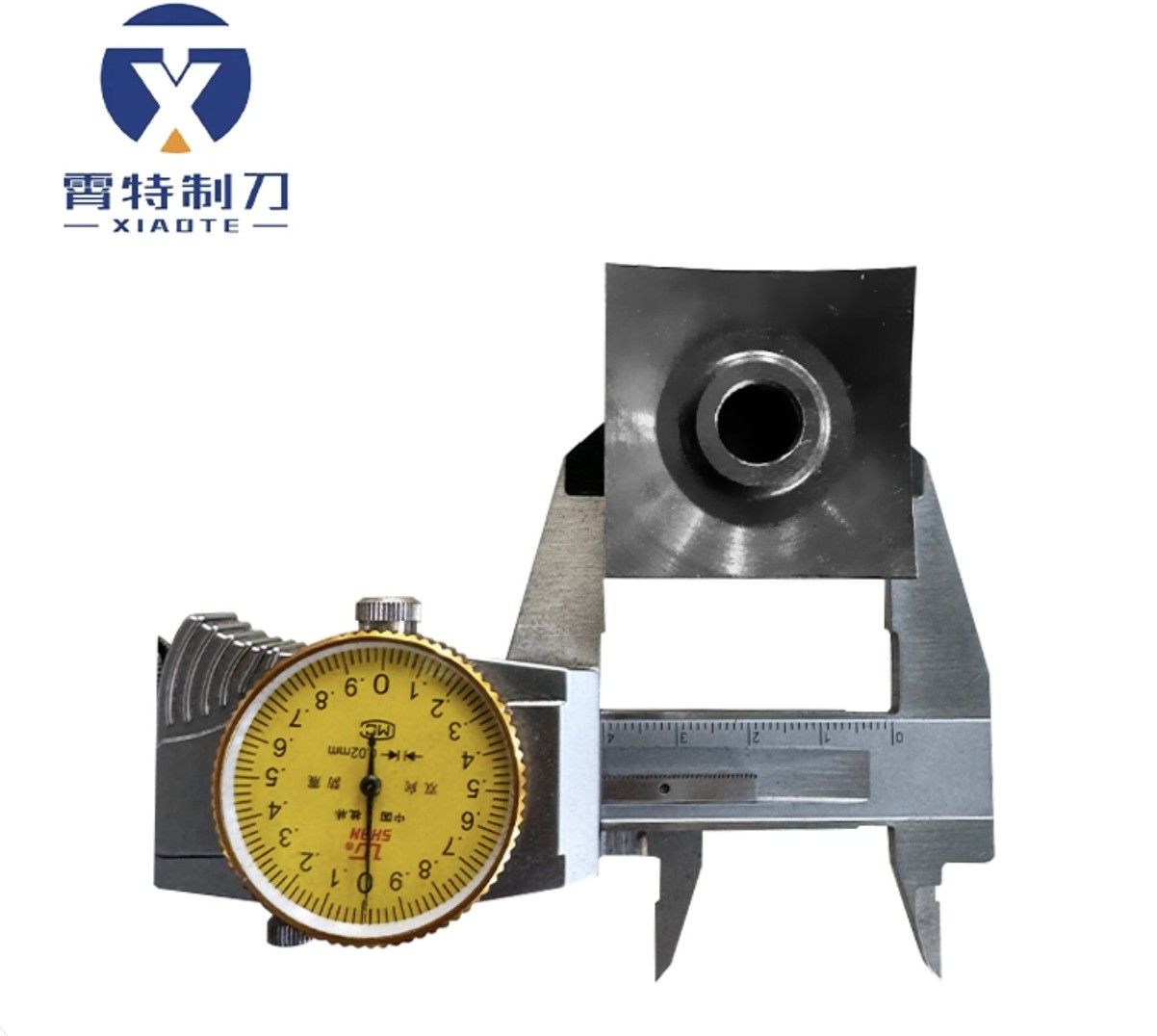
Single-shaft shredders rely on a hydraulic pusher that presses material against a spinning rotor. The blades on this rotor are typically square or rectangular with sharp edges designed for precise cutting rather than tearing.
How they operate:
As the rotor spins at medium-to-high speeds, the blades slice through material against a stationary bed knife. This “scissor-like” action allows for accurate particle sizing, controlled largely by a screen located beneath the rotor.
Best applications:
Plastic recycling: Excellent for purging lumps, pipes, and injection molding waste.
Wood processing: Ideal for creating biomass fuel or uniform wood chips.
Textiles: Capable of shearing fibers without tangling.
Many operators prefer single-shaft blades because they often feature replaceable inserts. Instead of replacing the entire rotor or welding new tips, you can simply rotate or swap the blade insert, saving significant maintenance time.
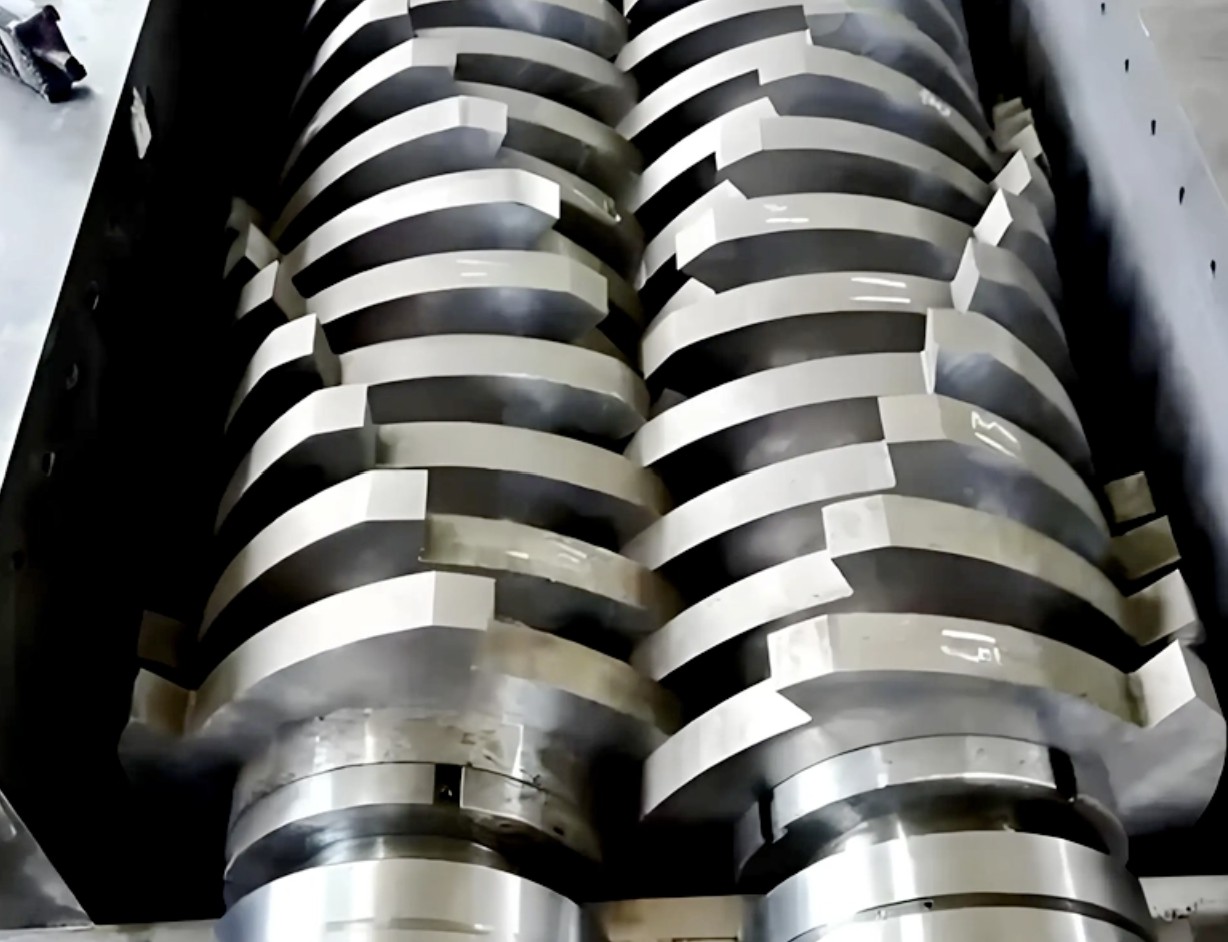
If you have ever seen a car or a tire being swallowed by a machine, you were likely watching a double-shaft shredder. These blades, often called shear blades, operate on two counter-rotating shafts. They do not cut as much as they grab, hook, and tear.
How they operate:
These machines run at low speeds but generate massive torque. The blades usually feature hook-like protrusions that grip bulky items and pull them down between the shafts. The interlocking design ensures that material is sheared completely.
Best applications:
Tires: The high torque rips through rubber and steel wire.
Metals: Capable of shredding car bodies, scrap drums, and light metal sheets.
E-waste: Crushes electronics to separate plastic casings from precious metal boards.
Bulky waste: Mattresses, furniture, and municipal solid waste (MSW).
The primary trade-off is that twin-shaft shredders produce a coarser, more irregular output compared to single-shaft designs.
For facilities that cannot afford jams or need a specific output size from a low-speed machine, multi-shaft setups are the answer. These machines typically use four shafts: two main cutting shafts and two secondary feeding shafts.
How they operate:
The secondary shafts help push bouncing or floating material (like hollow plastic containers) into the main cutters. This design is incredibly effective at preventing “bridging,” where material sits on top of the blades without being shredded.
Data from industry tests highlights the efficiency of this design. In straw shredding applications, optimized multi-shaft blades (Blade B) showed a reduction in material buildup of over 26% compared to standard designs (Blade A). This anti-jamming capability makes them essential for automated lines where continuous feed is required without operator intervention.
While shaft-based classification covers the bulk of the market, specialized applications require specialized blade actions.
Granulators are distinct from standard shredders. They operate at much higher RPMs and are designed for the secondary processing stage.
Operational differences:
While a shredder reduces a car bumper to fist-sized chunks, a granulator takes those chunks and reduces them to 6mm flakes. Granulator blades are thinner, sharper, and mounted at aggressive angles.
Efficiency impacts:
Upgrading granulator blades can yield massive ROI. A German recycling plant reported a 22% efficiency improvement and a 14% reduction in energy usage per ton of plastic simply by switching to high-performance tungsten carbide granulator blades.
Hammer mills don’t cut; they smash. The “blades” are actually blunt hammers attached to a hinge. As the shaft spins, the hammers extend outward via centrifugal force. When they strike the material—be it limestone, glass, or scrap electronics—the impact shatters it. This is the preferred method for recovering copper from motors or breaking down brittle minerals.
These blades are mounted on a massive rotating drum and shear against a fixed anvil. They are the heavyweights of the forestry and biomass industries, capable of processing entire tree trunks or bales of agricultural waste in a continuous stream.
The geometry of the blade determines how it cuts, but the material of the blade determines how long it cuts. Choosing the wrong steel can lead to catastrophic blade failure (shattering) or rapid dulling.
HSS is the workhorse of the cutting industry. It is heat-treated to retain hardness even at high temperatures.
Pros: Excellent wear resistance and heat resistance.
Cons: Can be brittle if subjected to extreme shock impacts.
Best Use: General-purpose shredding of plastics, rubber, and mixed waste where metal contamination is low.
When you need extreme abrasion resistance, carbide is the gold standard. It creates a blade that is nearly as hard as diamond.
Pros: Incredible longevity. A carbide blade can last significantly longer than tool steel in abrasive environments.
Cons: High cost and low impact toughness (they can crack if they hit a large solid rock or hardened steel).
Best Use: High-volume granulation of dirty plastics, tire recycling, and abrasive mineral processing.
Most industrial blades are crafted from specific alloy tool steels, selected to balance toughness and hardness.
D2 / SKD-11: High-carbon, high-chromium steels that offer great wear resistance. Ideal for plastic and wood applications.
Cr12MoV: A versatile steel that withstands impact better than D2, making it suitable for heavier-duty shredding.
9CrSi: Often used for softer materials like rubber, fiber, or paper where a razor edge is required but impact shock is low.
These occupy a niche at the very top of the market. Polycrystalline Diamond (PCD) tipped blades offer the highest possible wear resistance. They are typically reserved for specialized precision cutting of abrasive composites (like carbon fiber) or ceramics, where the high cost is justified by the extreme precision required.
Selecting a blade is a balancing act between the material you process, the volume you handle, and your budget. Here is a framework for making that decision.
Your material dictates the blade metallurgy.
Plastics: Requires toughness to handle elasticity. D2 or SKD-11 are standard.
Rubber: High viscosity means heat generation. Carbide or coated blades prevent the rubber from melting and sticking to the edge.
Metals: Requires impact resistance. High-alloy steels or specially heat-treated HSS prevent the blade from chipping when it shears through steel.
Wood: Requires sharpness. If the blade dulls, it starts to pulverize rather than cut, creating dust and fire hazards.
For intermittent use, standard OEM blades are sufficient. However, for 24/7 industrial operations, custom blades or premium materials pay for themselves. A Chinese furniture company that switched to custom blades for their pellet line reduced raw material costs by 35% and boosted annual profits by over $1 million. The initial cost of the premium blade was negligible compared to the operational gains.
If you need a specific particle size (e.g., for security destruction or extrusion feeding), blade geometry is key.
Coarse output: Use double-shaft shredders with thick, hooked blades.
Fine output: Use single-shaft shredders or granulators with tight clearances and screen configurations.
Blade thickness must be calibrated to the density of the object. Thick blades (e.g., 20mm+) handle heavy shock loads from car parts. Thinner blades (e.g., 6-10mm) are superior for slicing through hollow PET bottles efficiently without crushing them flat.
Even experienced facility managers fall into procurement traps. Avoid these three common errors:
1. Choosing based on price alone
Cheap blades often use inferior steel alloys that dull quickly. If you have to shut down the line to change blades twice as often, the labor cost and lost production time will far outweigh the savings on the blade price.
2. Ignoring shredder compatibility
Not all D2 steel is created equal, and not all “universal” blades fit every machine tolerance. Using a blade with a slightly incorrect bore size or thickness can damage the rotor shaft, leading to massive repair bills.
3. Overlooking the operating environment
Is your shredder outdoors? Is the material wet or acidic? Standard tool steels can rust and pit in these conditions. In chemical or high-moisture environments, you may need coated blades or specific stainless variants to prevent corrosion failure.
The industrial shredder blade is not just a spare part; it is a strategic asset. The efficiency of your entire waste management or recycling line hinges on the interaction between that piece of steel and your material.
By understanding the mechanics of your shredder—whether single-shaft, double-shaft, or granulator—and selecting the appropriate material for your application, you can unlock significant value. As the case studies of recycling plants show, the right blade choice can lead to double-digit efficiency gains and substantial profit increases.
When in doubt, consult with blade manufacturers who offer customization. Tailoring the metallurgy and geometry to your specific waste stream is often the most cost-effective move you can make.
Founded in 2008, Ma’anshan Xiaote Technology Equipment Co., Ltd. is a professional shredder blades supplier integrating manufacturing and international trade. With over 2,000 m² of in-house production facilities, we specialize in industrial shredder blades, including single-shaft and multi-tooth shredder blades, tungsten carbide blades, wood chipper blades, and customized cutting solutions.
Supported by experienced engineers and a global service team, we focus on application-driven blade design to improve shredding efficiency, reduce downtime, and extend blade service life. Our goal is to deliver the most suitable blade solution for every shredding application.


