Industrial Blade
Manufacturers
Manufacturers

- All
- Product Name
- Product Keyword
- Product Model
- Product Summary
- Product Description
- Multi Field Search
English
Views: 0 Author: Site Editor Publish Time: 2026-01-09 Origin: Site


Too often, operators view shredder blades as simple consumables—parts to be bought at the lowest price and replaced when they break. This mindset is a costly mistake. The blade is the primary interface between your machine and your material. It dictates your throughput, your energy consumption, the quality of your output, and the lifespan of your machine’s rotor.
A blade that is perfect for shearing through soft polyethylene film will chip or shatter if subjected to the high-impact shock of contaminated electronic waste. Similarly, a blade designed for maximum toughness might lack the edge retention needed for precision wood chipping, leading to frequent downtime for sharpening.
This guide moves beyond basic part numbers. We will explore the technical nuances of application fit, blade geometry, metallurgy, and lifecycle management. By the end, you will understand how to select a single shaft shredder blade that transforms your shredder from a cost center into a model of efficiency.
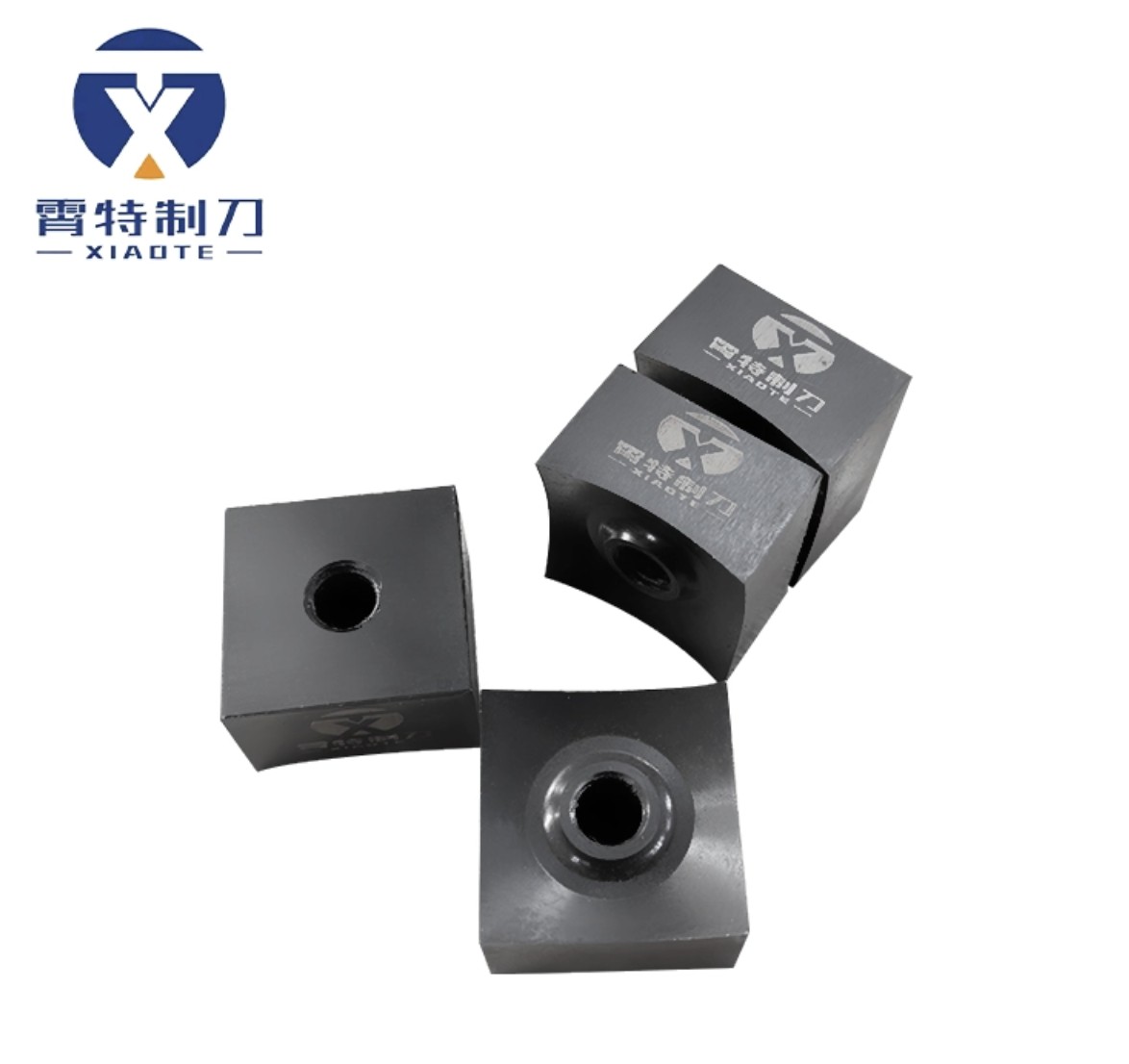
To choose the right blade, you must first understand the specific mechanics of a single shaft shredder. Unlike dual-shaft shredders, which use low-speed, high-torque shearing to rip apart bulky items into coarse strips, single shaft shredders are precision instruments designed for size reduction.
The core function of the blade in this system is not just to destroy material, but to cut it against a stationary counter blade (often called a bed knife) until it is small enough to pass through a sizing screen. This process requires a specific cutting action—usually a shearing motion—that produces uniform, consistent particles.
You generally choose a single shaft shredder (and thus, specific single shaft blades) when your goal is:
Controlled Output: You need a defined particle size, often as a pre-step for granulation, extrusion, or briquetting.
Material Uniformity: You are processing relatively homogenous materials like plastic lumps, wood blocks, or paper rolls.
Downstream Efficiency: You need to feed downstream equipment that is sensitive to inconsistent material sizes.
If your application involves purely volume reduction of mixed, highly contaminated landfill waste, a single shaft setup might not be the primary choice. However, for applications requiring high-quality reclaim, the single shaft shredder—and the precision of its blades—is unmatched.
The “right” blade is entirely dependent on what it has to cut. Let’s look at how material properties dictate blade selection in common scenarios.
Plastics are perhaps the most common application for single shaft shredders. However, “plastic” is a broad term.
Films and Fibers: These flexible materials tend to wrap around rotors. Blades here need sharp, tight clearances to shear the material cleanly rather than tearing it.
Purgings and Lumps: These are dense and hard. Blades need high impact resistance (toughness) to handle the shock of biting into a solid block of polymer without snapping.
Pipes and Profiles: These require a blade geometry that pulls the material in to prevent it from “dancing” on top of the rotor.
Wood processing ranges from clean timber to pallet recycling. Pallets are notoriously difficult because they often contain nails and screws. A blade designed for clean wood (high hardness for edge retention) will fail catastrophically if it hits a nail. Here, a compromise material—balancing hardness with toughness—is essential.
Rubber is abrasive and generates significant heat during shredding due to friction. It is also elastic; it wants to bounce back rather than cut. Blades for rubber often require specific coatings or surface treatments to reduce friction and prevent material from sticking or “gumming up” the cutting chamber.
This is the torture test for single shaft blades. Copper cables are ductile, while aluminum profiles can be rigid. E-waste often contains hidden rigid parts (like steel brackets) that cause shock loads. Blades here are typically made from modified alloy steels that prioritize shock absorption over razor-sharp edge retention.
Similar to films, textiles are difficult to cut because they fray. If the blade edge is dull or the gap between the rotating blade and the bed knife is too wide, the machine will jam. Blades for textiles must be kept extremely sharp and often feature aggressive hook angles to force the material into the cutting zone.
Before looking at steel grades, you must look at geometry. The physical shape of the blade determines how it interacts with the material.
Cutting Efficiency: A sharper angle cuts with less resistance (lowering amperage draw on the motor) but creates a weaker blade tip that is prone to chipping.
Feeding Behavior: The shape of the blade determines if the rotor “bites” the material aggressively or shaves it away gradually.
Wear Patterns: A well-designed blade distributes wear evenly. A poorly designed one creates hotspots that dull quickly, forcing premature replacement even if 90% of the blade is still fine.
Design decisions must be made before material selection. If the geometry is wrong for the feedstock, no amount of expensive tool steel will save the operation.
The profile of the cutting edge is the first variable to define.
The standard flat or straight edge is the workhorse of the industry. It provides a clean, scissor-like shearing action against the counter blade.
Best For: Soft, uniform materials like plastic blocks, paper, and wood without contaminants.
Pros: Easy to sharpen (surface grinding), predictable wear, and generally lower cost.
Cons: Can struggle to grab bulky or round objects, which might roll over the rotor rather than being shred.
Imagine a steak knife vs. a butter knife. A serrated edge features small teeth or grooves along the cutting face.
Best For: Slippery or tough materials that tend to slide away from a straight cut, such as certain films, thick rubber, or hard plastics.
Pros: The “teeth” pierce the material surface, initiating the cut and preventing slippage.
Cons: Much harder to re-sharpen; often requires specialized grinding equipment.
These blades feature a scooped or curved profile, often resembling a hook or a “C” shape.
Best For: Bulky, hollow, or elastic materials like tires, hollow plastic containers, and woven sacks.
Pros: The hook shape physically grabs the material and pulls it down into the cutting gap. This “aggressive feeding” prevents the machine from idling while material floats on top of the rotor.
Cons: The complex geometry can be more expensive to manufacture and subjects the blade tip to higher mechanical stress.
Digging deeper into geometry, the “hook angle” (or rake angle) is critical. This is the angle of the blade face relative to the material it strikes.
Positive/Aggressive Angle: A blade that leans forward into the cut. It bites deeply and pulls material in rapidly. This increases throughput but puts immense strain on the motor and the blade itself. It is ideal for lightweight materials that need help entering the rotor.
Negative/Passive Angle: A blade that leans back slightly. It scrapes or shaves material rather than grabbing it. This is safer for harder materials (like hard plastics or purge blocks) because it reduces the shock load on the rotor, preventing stalling or blade breakage.
Matching the feeding aggressiveness to the material density is key. If you use an aggressive hook angle on a dense purge block, you risk stalling the rotor or snapping the blade shaft.
Blade thickness is a simple trade-off: thicker blades handle more impact; thinner blades slice with less resistance. However, the mounting pattern is equally important.
Blades are typically arranged on the rotor in specific patterns—often V-shapes (chevron) or spirals.
V-Shape: Centers the material in the middle of the rotor, keeping wear away from the side walls and bearings.
Spiral: Ensures that only a few blades are cutting at any exact millisecond. This distributes the cutting load smoothly over time, reducing energy spikes and vibration.
When choosing a blade, ensure the thickness and bolt-hole configuration match the rotor’s original specification exactly. A blade that is even 1mm too thin may not seat correctly, leading to catastrophic failure under load.
Once geometry is defined, we move to metallurgy. This is the axis of decision-making that most directly impacts cost and lifespan.
This is the industry standard for 80% of applications. Materials like D2 and SKD-11 offer an excellent balance. They are hard enough to hold an edge for hundreds of hours but tough enough not to shatter if they hit a small knot in wood or a thick chunk of plastic.
Verdict: The go-to choice for general plastics and clean wood recycling.
HSS contains higher levels of tungsten and molybdenum. It retains hardness even at high temperatures.
Verdict: Best for high-throughput plastic lines where friction heat is an issue, or for precision cutting where the blade must remain razor-sharp to avoid tearing the product. The cost is higher, but the cut quality is superior.
These steels are formulated for toughness (impact resistance) rather than extreme hardness.
Verdict: Essential for “dirty” applications like pallet recycling (nails), municipal solid waste (MSW), or shredding tires where wire reinforcement is present. They will dull faster than D2, but they won’t crack.
Tungsten carbide is extremely hard—almost ceramic-like. These blades usually consist of a steel body with a brazed carbide cutting edge.
Verdict: Use these for abrasive materials like fiberglass, dirty agricultural film (sand/grit), or tires. They offer incredible wear life (often 4-10x longer than steel) but are brittle. They cannot handle shock loads (like a hammer or a large bolt entering the shredder).
When reading a spec sheet, look for:
Hardness (HRC): Higher = better wear resistance, lower toughness.
Toughness: Higher = better shock resistance, lower edge retention.
Wear Resistance: Ability to resist abrasion (sand, glass).
It sounds obvious, but blade fitment errors are a leading cause of shredder downtime. Single shaft shredders operate with tight tolerances—often a gap of only 0.5mm to 1.0mm between the rotating blade and the fixed bed knife.
If a replacement blade is manufactured with poor tolerances, you cannot achieve this precise gap.
Gap too large: Material folds over instead of cutting, causing friction, heat, and jams.
Gap too small: Risk of blade collision (metal-on-metal), which destroys the rotor and the bed knife instantly.
Always verify the bore size, bolt pattern, and overall dimensions against the OEM specifications. “Close enough” is not acceptable in high-speed rotating machinery.
Two blades can look identical and be made of the same D2 steel, yet perform differently. The difference lies in manufacturing quality.
Heat Treatment is the secret sauce. A blade must be hardened to the correct HRC (Rockwell Hardness) throughout. If the heat treatment is uneven, the blade might have soft spots that wear out instantly or brittle spots that crack. Quality manufacturers use vacuum heat treatment and multiple tempering cycles to ensure the steel’s internal structure is uniform.
CNC Machining ensures the blade surfaces are perfectly flat and parallel. If a blade is slightly warped, it won’t seat flat against the rotor. This creates stress points. When the bolt is tightened, the blade is already under tension—add the impact of shredding, and it snaps.
Buying the right blade is only half the battle; maintaining it is the other.
Rotation: Most single shaft blades are square or rectangular with 2 or 4 cutting edges. When one edge dulls, rotate it 90 or 180 degrees. Do not wait until the edge is completely rounded off—this increases stress on the machine.
Sharpening: Establish a schedule. Sharpening removes a small amount of material to restore the edge. Crucial: You must also adjust the bed knife (counter blade) after sharpening or rotating to maintain the correct cutting gap.
Inspection: Check torque settings on blade bolts regularly. Vibration loosens bolts. A loose blade will wobble and eventually destroy the rotor seat.
Your blade choice influences your production numbers.
Aggressive blades (high hook angle) generally increase throughput (kg/hour) because they grab more material per rotation. However, they may produce more “fines” (dust).
Passive blades might process slower but produce a cleaner, more uniform chip with less dust.
If your downstream extruder requires pellets free of dust, you might sacrifice some throughput speed for a higher quality cut by using a sharper, less aggressive blade geometry.
Buying on Price Alone: Ignoring TCO (Total Cost of Ownership).
Ignoring the Bed Knife: Installing new rotor blades against a worn-out bed knife is a waste of money. The gap will still be poor.
Overlooking Contamination: Using high-hardness blades in a waste stream that hasn’t been screened for metal/stones.
Neglecting Hardware: Re-using stretched or damaged bolts to mount new blades.
Selecting a single shaft shredder blade is a strategic decision that ripples through your entire processing line. It requires balancing the five pillars: application constraints, geometric design, material metallurgy, machine compatibility, and lifecycle cost.
Don’t rely on trial and error. Analyze your material stream for contaminants and hardness. Match the blade geometry to the feeding behavior you need. Choose a steel grade that balances wear life with the risk of breakage. By taking this structured approach, you ensure your single shaft shredder operates at peak efficiency, delivering high-quality output ton after ton.


